
No products in the basket.
Articles
How to Style Chelsea Boots: A Men’s Guide
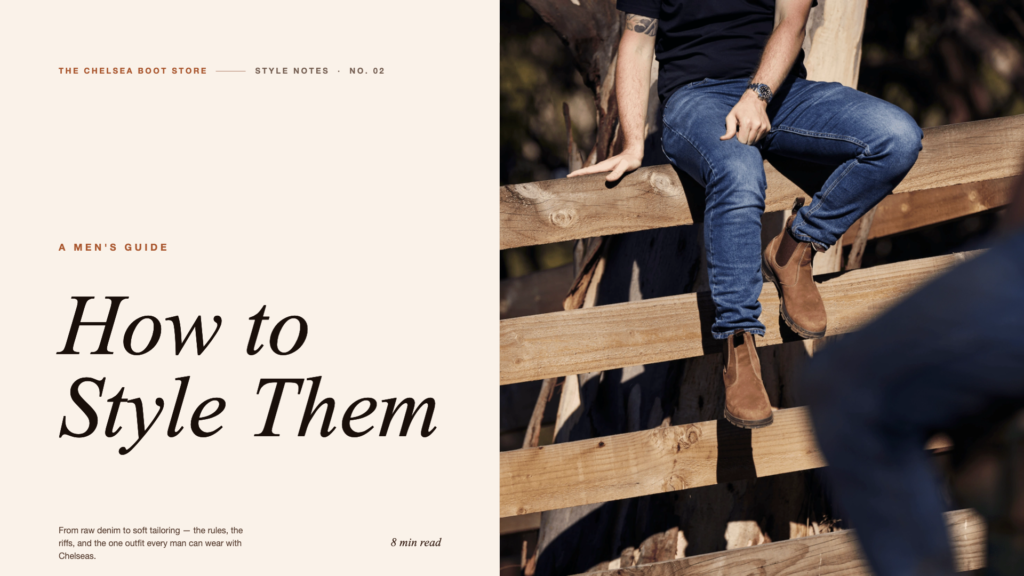
Chelsea boots have remained a fixture of men’s dressing for decades not because of fashion cycles, but because they genuinely work across a broad range of contexts. A well-chosen pair sits equally at home with a suit as it does with weekend jeans, making them one of the most practical footwear investments a man can make.
It’s useful to know how to wear Chelsea boots across different dress codes, how to approach colour and material choices, and the small details that make the difference between an outfit that works and one that falls apart.
Get the Trouser Length Right First
Before addressing specific outfits, trouser break is worth covering in detail because it is the most common mistake men make when wearing Chelsea boots.
Chelsea boots work best when there is very little to no trouser break, meaning the fabric sits just at or slightly above the top of the boot. Too much break creates a bunched, heavy look around the ankle that hides the clean line of the boot and shortens the overall silhouette.
Different trouser styles require slightly different approaches to achieve this:
- Slim-fit trousers and jeans: Naturally provide less break and are the easiest option. A small turn-up or cuff draws the eye cleanly to the boot without any additional adjustment needed
- Straight-leg jeans: Turn up the hem once or twice to sit just above the ankle. A single clean fold is preferable to multiple small rolls, which can look unintentional
- Tapered trousers: Arguably the most compatible trouser style with Chelsea boots. The narrowing leg creates a natural, clean finish over the boot without stacking
- Chinos in standard fit: A single roll or break at the ankle works well. Avoid letting the fabric pool around the boot
- Wider-leg or relaxed trousers: Harder to pair with Chelsea boots. If worn, the trousers should be long enough to skim the top of the boot cleanly rather than bunching above it. A heavier-soled boot provides better visual balance with wider trousers
- Suit trousers: Should have a half-break or no break at the top of the boot. A full break with tailoring looks heavy and obscures the cleaner silhouette that makes a Chelsea boot work in formal contexts
With Jeans
Jeans are the most natural pairing for Chelsea boots. The boot adds a cleaner finish than a trainer without feeling overdressed, making it the default choice for smarter everyday dressing.
Slim or straight-leg jeans in a mid or dark wash work best. Very wide or relaxed cuts tend to swallow the boot and lose the ankle silhouette.
Additional details that affect how well the combination reads:
- Denim weight: Heavier denim, around 12 to 14oz, holds its shape better around the ankle, creates a cleaner turn-up, and pairs well with more substantial boots such as Blundstone. Lighter denim is better suited to slimmer, more refined Chelsea boots
- Wash: Dark indigo or raw denim creates the sharpest contrast with a black or dark brown boot. Mid-wash denim pairs well with tan or cognac leather. Heavily distressed or stonewashed jeans introduce an inconsistency in register that is hard to resolve with any boot
- Cuff style: A clean single fold reads best in most contexts. A pinroll, tucking the inner seam before rolling, creates a tighter, neater cuff and works particularly well with slimmer jeans and lower-profile boots
- Sock visibility: Showing a section of sock or bare ankle between the hem and the boot can work well in casual contexts. The sock should be treated as a deliberate detail rather than an afterthought, particularly if it is visible
With Chinos
Chinos and Chelsea boots work well for smart casual dressing. A tapered chino in olive, navy, stone or camel creates a clean line over the boot without stacking excess fabric at the ankle.
Details that elevate this combination:
- Fabric weight: A mid-weight cotton or cotton-stretch chino holds its shape and creates a clean finish. Very lightweight chinos can look limp and unstructured around the ankle, particularly if turned up
- Colour temperature: Warm-toned chinos such as camel, tan and olive pair more naturally with brown and tan leather. Cool-toned chinos in navy, slate or charcoal work better with black or very dark brown leather
- Sock visibility: In a smart casual context, a subtle patterned or textured sock visible above the boot can function as a considered detail. A bold or mismatched sock is harder to pull off unless the overall outfit is built around casual confidence
- Turn-up depth: A deeper cuff of around 4 to 5cm suits heavier fabrics and casual contexts. A shallower cuff of 2 to 3cm reads sharper with tailored fabrics and smarter settings
With a Suit
A Chelsea boot with a suit has moved from a fashion-forward choice to mainstream acceptance in professional settings across the UK. A sleek, low-profile Chelsea boot in black or dark brown leather provides a modern alternative to a traditional Oxford or Derby shoe, particularly with slimmer cuts of tailoring.
Additional details that determine whether this combination succeeds:
- Suit fabric texture: Smooth wool suits in plain weave or subtle check pair well with polished leather. Tweed, flannel and heavier cloth suit a more robust boot in dark brown leather with a slightly more substantial sole
- Colour pairing: Black leather with grey, charcoal and navy. Dark brown with mid-grey, tan and olive green suiting. Avoid black boots with a brown suit or very light tan boots with a dark charcoal suit, as the contrast lacks coherence
- Sole weight: A slim leather or minimal rubber sole is essential in formal contexts. Chunky commando soles look disproportionate against tailored fabric
- Toe profile: A sleeker almond or pointed toe reads better with formal tailoring. A round-toe boot in a suit context can feel too casual unless the suiting is deliberately relaxed in fit and fabric
- Sock visibility when seated: In a suit context, the sock should always be visible when seated and should coordinate with the trouser colour. A fine-knit navy or charcoal sock with a matching suit is a reliable choice
Smart Casual: Where Chelsea Boots Perform Best
Smart casual is where Chelsea boots show their full range. The register is relaxed enough to let versatility show without the constraints of formal dressing.
A reliable baseline combination: dark slim jeans or tailored chinos, a plain OCBD or flannel shirt, an unstructured blazer or overshirt, and a Chelsea boot in brown or black leather. Adjustable up or down by swapping individual pieces without needing to change the footwear.
Outer layer options that work particularly well in this register:
- Unstructured blazer over a T-shirt: A lighter, more relaxed approach that works well with brown or tan Chelsea boots and lighter denim or chinos
- Overshirt or CPO jacket in flannel or twill: Pairs well with dark jeans and a more robust boot such as a Blundstone or GORAL
- Chunky knitwear with tailored trousers: The contrast between texture and structure creates visual interest. A dark brown or tan Chelsea boot grounds the combination effectively
- Harrington or bomber jacket: Works in casual smart contexts, pairing well with straight jeans and a tan or cognac Chelsea boot for a clean, unfussy result
- Waxed or heavy cotton jacket: Strong in country-oriented smart casual settings, particularly with cord trousers and an Orca Bay or GORAL Chelsea boot
Casual Weekend Wear
For relaxed everyday use, Chelsea boots still work well when the rest of the outfit is casual. Dark jeans or heavyweight chinos, a chunky knitwear piece or sweatshirt, and a Chelsea boot with a more substantial sole combine naturally without looking like an afterthought.
Blundstone boots are particularly well-suited to this kind of use. Their rubber sole and robust construction handle different surfaces and weather conditions well, and the unpretentious profile suits relaxed weekend dressing without looking untidy.
Country and Outdoor Styling
Chelsea boots have their origins as riding boots, which means a country-oriented aesthetic suits them instinctively. Cord or waxed cotton trousers, a heavy knit or Harrington jacket, and a leather Chelsea boot in tan or dark brown create a look that feels considered rather than fashion-led.
Orca Bay Chelsea boots work particularly well in this context. Their structured British leather construction and refined profile sit naturally within a country wardrobe, pairing well with earthy tones and natural fabrics.
Choosing the Right Colour
Most men start with one pair, so the colour decision matters.
Black leather: The most formal option and the most broadly wearable across outfit registers. The best starting point if your lifestyle includes regular smart or business casual dressing.
Dark brown: The most versatile choice for most men. Works across casual, smart casual and most formal situations. A softer, more approachable aesthetic than black, and particularly strong in country and Cotswolds contexts.
Tan or cognac: The most relaxed option. Works best with lighter tones, earthy palettes and weekend dressing. Less suited to formal settings but excellent for everyday wear.
Suede: Softer and more textural than leather. Best in grey, mid-brown or camel. Works well in smart casual settings but requires more maintenance and is more weather-sensitive.
Additional colour and material considerations worth knowing:
- Burgundy or oxblood: A strong choice for buyers who already own a black or brown pair. Works particularly well with grey, navy and camel outfits and adds a point of difference without drawing excessive attention
- Chelsea boots with a contrasting sole: A white or light commando sole on a dark leather upper is a contemporary detail that works in casual and smart casual contexts but is not suited to formal wear
- Nubuck vs suede: Nubuck is buffed from the grain side of the leather and has a slightly finer, more durable texture than suede. It is more resistant to water spotting but requires specific cleaning products. Worth considering if you like the suede aesthetic but want something slightly more hardwearing in British weather
A Note on Sole Height and Type
The sole affects how the boot reads within an outfit and how it performs underfoot. Matching sole weight to the overall dress level of an outfit makes a meaningful difference to the final result:
- Slim leather sole: The most formal option, best with tailored clothing and suits. Provides the cleanest silhouette but the least underfoot cushioning
- Minimal rubber sole: Found on many mid-range everyday Chelsea boots. Provides grip and cushioning while maintaining a relatively low-profile appearance. Works across most outfit registers
- Commando or lug sole: Thick, heavily patterned rubber. Works well in casual and country contexts but clashes with tailored clothing due to visual weight imbalance
- Crepe sole: A softer natural rubber with a slightly vintage aesthetic. Good cushioning underfoot but shows wear more quickly than other sole types and is less easily resoled
Frequently Asked Questions
Can you wear Chelsea boots with a suit?
Yes, and it is an increasingly accepted choice across UK professional settings. A slim, low-profile Chelsea boot in black or dark brown leather with a minimal sole reads as a considered, modern alternative to a traditional Oxford. The suit should be well-fitted and the trouser break minimal for the combination to work well.
What colour Chelsea boots are the most versatile for men?
Dark brown leather offers the broadest versatility for most men. It works across casual, smart casual and formal contexts, suits a wide range of outfit colours, and has a less severe aesthetic than black. Black is the better choice if your primary context is formal or professional.
Should you tuck trousers into Chelsea boots?
No. Chelsea boots are designed to be worn with the trouser sitting outside and above the boots. Tucking trousers in is not how the style is intended to be worn and generally looks out of place outside of very specific equestrian-inspired outfits.
What socks should you wear with Chelsea boots?
In a casual context, a visible sock in a complementary colour or subtle pattern can work as a deliberate detail. In smart casual and formal contexts, coordinate the socks with the trousers rather than the boots. Avoid very short socks that disappear inside the boot without providing any heel coverage, as these cause friction and blisters.
Are Chelsea boots smart or casual?
Both, which is the point. A Chelsea boot in polished black leather with a slim sole reads as smart. The same boot in tan leather with a commando sole reads as casual. The material, colour and sole weight determine the register, not the silhouette. This adaptability is why they remain one of the most practical footwear choices for men.
Can you wear Chelsea boots in summer?
Yes, though leather construction limits breathability in warm weather. A Chelsea boot with a thinner sole and a lighter lining is more comfortable in warmer months. Pairing with lightweight trousers or chinos rather than heavy denim also helps. Suede Chelsea boots tend to feel slightly more breathable than polished leather in summer.
Do Chelsea boots suit larger feet?
Yes. The clean, unbroken line of a Chelsea boot is generally flattering across foot sizes. A round or almond-toed boot with a slightly more substantial sole provides better visual balance on larger feet than a very pointed, flat-soled style. A darker colour will also create a slimmer visual profile than a high-contrast combination.