
No products in the basket.
Articles
How to Waterproof Leather Boots for Autumn
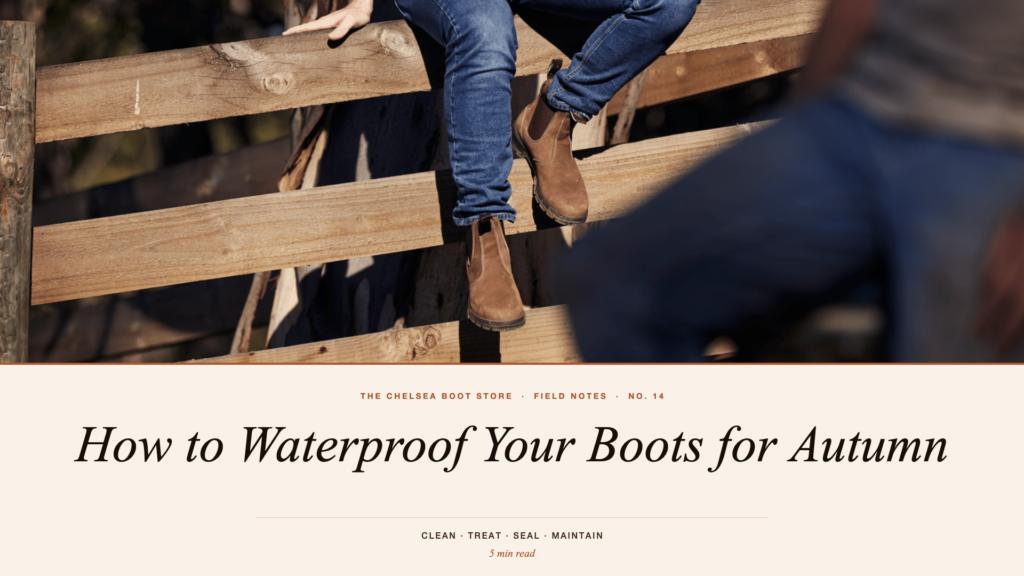
Waterproofing is the single most neglected step in leather boot care, and autumn is the season when that neglect becomes most costly. A boot that spent summer in dry conditions may look perfectly maintained but be significantly depleted in its water resistance, and the first heavy autumn rainy day will reveal that gap quickly. Taking thirty minutes to waterproof before the season begins, and maintaining that protection through regular reapplication, makes a meaningful difference to both the long-term condition of the leather and the day-to-day comfort of wearing boots in British weather.
Why Waterproofing Matters Beyond Dry Feet
The obvious purpose of waterproofing is keeping feet dry. The less obvious but equally important purpose is protecting the leather from the specific damage that water causes over time.
When leather gets wet repeatedly without adequate waterproofing, water penetrates the surface and begins to break down the structure of the leather fibres. As the boot dries, those fibres contract and stiffen. Over multiple wet and dry cycles, unprotected leather becomes progressively more brittle and develops surface cracking that cannot be reversed by conditioning alone.
Waterproofing creates a barrier that allows the leather to shed water before it penetrates deeply, which keeps the leather supple, reduces the pace of ageing, and maintains the appearance and structural integrity of the boot across the wetter months. Conditioning and waterproofing work together: conditioning keeps the leather supple and healthy, and waterproofing protects that conditioning from being washed away with the next rain shower.
When to Apply Waterproofing
The best time to waterproof leather boots is before you need them, not after. Apply waterproofing at the start of autumn, before the first spell of sustained wet weather. This gives your boots the protection they need from the outset and prevents you from having to treat them after they have already become soaked.
Specifically, waterproofing should be applied:
- At the start of the autumn season, regardless of the visible condition of the boot
- After any full cleaning that strips surface product from the leather
- Every four to six weeks during regular autumn and winter use
- Immediately after any prolonged or heavy exposure to rain, mud or salt water
- Before any planned walking trip or outing in sustained wet conditions
How to Waterproof Leather Boots: Step by Step
Applying waterproofing correctly takes under ten minutes and is straightforward when the steps are followed in the right order.
Step 1: Clean the boot thoroughly. A waterproofing product applied over dirt creates an uneven barrier that performs poorly. Use a soft brush or damp cloth to remove surface dirt, and a dedicated leather cleaner for more ingrained soiling. The Dasco Multi-Cleaner Spray, available at The Chelsea Boot Store, works across smooth leather, suede and nubuck and is an effective first step before any treatment. Allow to dry fully before continuing.
Step 2: Condition the leather. Conditioning before waterproofing opens the leather slightly and allows the waterproofing product to penetrate more evenly. Apply a small amount of leather conditioner with a soft cloth, work it in thoroughly and allow it to absorb before moving to the next step. This sequence of conditioning before waterproofing is more effective than waterproofing first.
Step 3: Apply waterproofing. Use a spray waterproofing product for most boot styles, as it reaches seams, welt areas and shaped surfaces more evenly than a wax product applied by hand. Hold the spray approximately 15 to 20cm from the leather surface and apply an even coat across the entire upper, paying particular attention to the seams and the welt area where water most commonly penetrates. Apply a second coat after the first has dried to build a more complete barrier.
Step 4: Allow to dry fully. Leave the boots in a ventilated space at room temperature, away from direct heat, until the waterproofing has dried and set completely. Wearing boots before the product has fully dried reduces its effectiveness.
Different Materials Require Different Products
Not all waterproofing products suit all leather types, and using the wrong product can damage the surface or alter the appearance of the material permanently.
Smooth leather: A spray waterproofing product designed for smooth leather is the safest and most effective option. It penetrates without altering the finish and leaves no residue. Wax-based waterproofing products also work on smooth leather but can darken the leather slightly, which is worth testing on an inconspicuous area before applying across the full boot.
Suede and nubuck: These materials require a waterproofing product specifically designed for suede and nubuck. Smooth leather products applied to suede or nubuck can flatten the surface texture and permanently alter the appearance of the material. The Dasco Multi-Cleaner Spray is compatible with suede and nubuck as a cleaner, and dedicated suede waterproofing sprays should be used for the protection step.
Waxed leather: Some boots, particularly country-oriented styles, use a waxed leather finish that already has inherent water resistance. These benefit from periodic rewaxing with a specific wax dressing rather than a spray waterproofing product, which may not adhere effectively to a waxed surface.
Boot-Specific Waterproofing Considerations
Blundstone: The rubber sole unit of Blundstone boots is inherently waterproof at the base, meaning the focus of waterproofing treatment is the leather upper. Pay particular attention to the join between the leather upper and the rubber sole, where water can penetrate if the bond degrades. A spray waterproofing product applied across the full upper after conditioning is the most effective approach.
Orca Bay: Orca Bay‘s structured leather construction benefits from thorough waterproofing at the start of each season. The welt area is worth treating specifically with a wax-based waterproofing product applied by hand, as the welt-to-upper junction is a primary point of water entry on any structured boot.
GORAL: Horween Chromexcel leather has natural water-resistant properties due to its hot-stuffed processing, where oils and greases are worked into the leather under heat. This does not remove the need for additional waterproofing in sustained wet conditions, but does mean the leather starts from a more resistant base than many alternatives. Regular conditioning maintains the oil content that contributes to Chromexcel’s natural resistance.
Seasonal Waterproofing Routine
A simple seasonal routine that takes minimal time and significantly extends the waterproof performance of any leather boot through autumn:
Before the season begins, clean, condition, and apply a double coat of spray waterproofing to dry, clean leather. Allow to set fully. During the season, reapply a single coat every four to six weeks or after any particularly heavy or sustained soaking. At the end of the season, clean the boots thoroughly before storing and apply a fresh coat of waterproofing before putting them away for the summer. Boots stored with active waterproofing protection emerge in better condition than those stored dry.
Frequently Asked Questions
How do I waterproof leather boots at home?
Clean the leather thoroughly, condition it with a quality leather conditioner, then apply an even coat of spray waterproofing product across the entire upper, including seams and welt areas. Allow to dry at room temperature. Apply a second coat for a more complete barrier. Reapply every four to six weeks during autumn and winter use.
How often should you waterproof leather boots?
Every four to six weeks during regular autumn and winter use, or after any heavy or sustained exposure to rain, mud or salt water. Apply waterproofing at the start of the season, before your first wet outings. Reapply it after any thorough cleaning, as cleaning can strip away the leather’s existing surface protection.
Can you use the same waterproofing on suede and leather?
No. Smooth leather waterproofing products can permanently alter the texture and appearance of suede or nubuck. Suede and nubuck require a specific waterproofing spray designed for those materials. The Dasco Multi-Cleaner Spray at The Chelsea Boot Store is compatible with both smooth leather and suede as a cleaner, but the waterproofing step requires material-specific products.
Do new boots need waterproofing before the first wear?
Yes, particularly for autumn or winter purchases. New boots come with a factory finish but not necessarily with active waterproof protection suited to UK conditions. Cleaning, conditioning and waterproofing before the first wearing is a simple step that protects the leather from the outset and prevents the premature ageing that wet conditions cause to untreated leather.
Does waterproofing change the colour of leather boots?
Spray waterproofing products designed for smooth leather typically do not alter the colour noticeably. Wax-based products and conditioners can darken leather slightly, particularly lighter-coloured boots. Testing any new product on a small, inconspicuous area before applying it across the full boot is the safest approach when using a product for the first time.
Is Blundstone waterproof already?
Blundstone boots are highly water-resistant at the base due to their rubber sole unit, but the leather upper benefits from additional waterproofing treatment, particularly at the join between the upper and the sole. Applying a spray waterproofing product to the full upper at the start of autumn significantly extends the boot’s performance in wet conditions.