
No products in the basket.
Articles
The Buyer’s Guide to Chatham Shoes
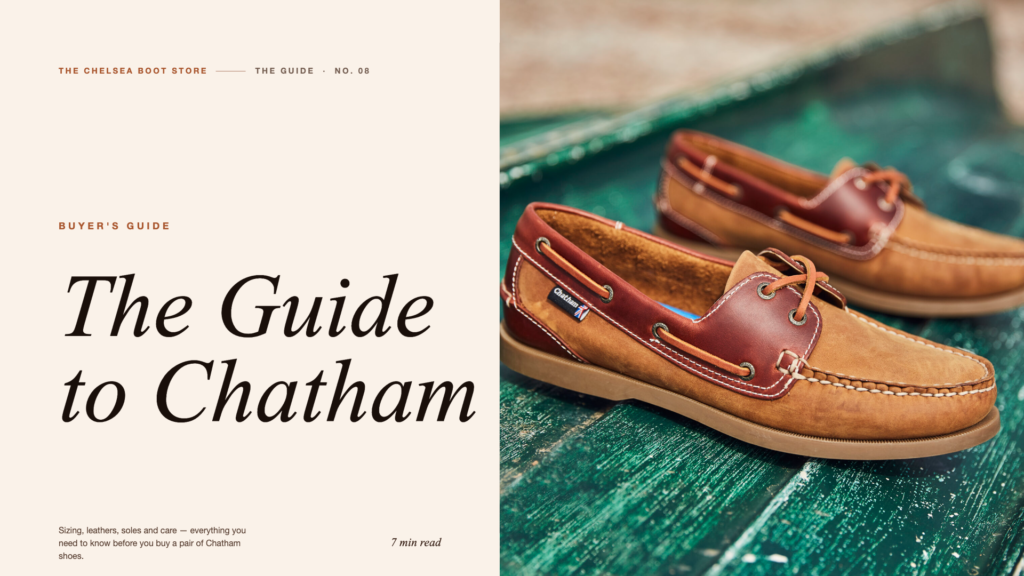
Chatham has built its reputation on a straightforward proposition: footwear designed for genuine coastal and marine use that performs just as well in everyday life on land. Founded in 1989, the brand has spent over three decades refining deck shoes specifically for the demands of British coastal conditions, and that focus shows clearly in the construction details that set Chatham apart from generic deck shoe alternatives.
This guide covers what makes Chatham deck shoes distinctive, the specific models available, and how to choose the right pair.
What Makes Chatham Different
Chatham’s approach to deck shoes is rooted in authentic marine use rather than a borrowed aesthetic. Several specific construction choices reflect this directly.
- Salt-resistant leather treatment: Applied across Chatham’s deck shoe range as standard, this finishing process prevents the white salt residue that develops on standard leather after exposure to sea water and spray. For anyone using their deck shoes near or on the water regularly, this is a meaningful and genuinely practical difference rather than a marketing claim
- Non-marking, siped rubber soles: Designed specifically to maintain grip on wet decks, polished floors and smooth stone without leaving scuff marks behind, a detail that matters both on a boat and in coastal pubs and restaurants with varnished or polished flooring
- Hand-finished detailing: Stitching, edge finishing and trim detail are completed by hand, giving Chatham’s deck shoes a more refined appearance than mass-produced alternatives at a similar price point
- British coastal design heritage: Over 25 years of producing footwear specifically for UK coastal conditions has shaped Chatham’s approach to leather selection, sole compound and overall construction in ways that purely fashion-led deck shoe brands have not had reason to consider
The Chatham Deck Shoe Range
Chatham’s men’s range currently includes two dedicated deck shoe styles, alongside Chelsea boots and other footwear built around the same coastal design principles.
Chatham Bermuda Deck Shoes: The classic Chatham deck shoe silhouette. A moccasin-stitched toe, full-grain salt-resistant leather upper and a non-marking siped sole. Available in multiple colourways, giving buyers a genuine choice depending on how the shoe will be worn and styled. The Bermuda is the most traditional expression of the deck shoe within Chatham’s range and the natural starting point for anyone new to the brand.
Chatham Deck G2 Shoes: A more contemporary take on the deck shoe silhouette, built on the same marine-grade construction principles but with a slightly more tailored profile and refined lacing detail. The G2 suits buyers who want the practical benefits of a proper deck shoe with a look that leans closer to smart casual than the more traditional Bermuda silhouette.
Both styles share the same core construction standards. The decision between them comes down to which silhouette suits the wearer’s existing wardrobe and how the shoe will primarily be worn.
Sizing and Fit
Chatham deck shoes generally run true to UK sizing. The moccasin-stitched construction used across the range creates a closer, more wrap-around fit than a conventional lace-up shoe, particularly across the toe box, where the stitched seam draws the upper snugly around the foot.
New leather will feel slightly firm initially and will soften with wear, in line with any quality full-grain leather shoe. If you are between sizes, sizing down is generally the safer choice with deck shoes, as the upper will mould to the foot more closely than the lower volume would initially suggest, and a slightly loose fit will only become looser as the leather settles.
Caring for Chatham Deck Shoes
Chatham’s salt-resistant leather treatment provides a genuine practical advantage, but it does not remove the need for regular care entirely. A few specific points are worth knowing for Chatham deck shoes in particular.
- Rinse off salt water after use: While the leather is treated to resist salt residue, rinsing the upper with fresh water after exposure to sea water further protects the finish and prevents any gradual build-up over repeated use
- Condition regularly: A quality leather conditioner applied every four to six weeks during regular wear keeps the leather supple and helps maintain the salt-resistant treatment’s effectiveness over the life of the shoe
- Clean the siped sole: Debris and grit can lodge in the fine cuts of the siped sole over time, gradually reducing grip. A soft brush used periodically keeps the siping clear and maintains the sole’s performance
- Allow to dry naturally: After exposure to water, allow Chatham deck shoes to dry at room temperature away from direct heat. Direct heat sources can cause the leather to crack or the adhesive bonding in the construction to weaken over time
Why Choose Chatham Over a Generic Deck Shoe
The difference between a Chatham deck shoe and a generic alternative becomes clear in conditions that actually test the shoe: wet decks, salt spray, polished floors and repeated exposure to coastal weather. The salt-resistant leather treatment, the genuinely functional siped sole and the hand-finished construction are all decisions made with real marine use in mind, not simply styling cues borrowed from the category.
For buyers who want a deck shoe that performs as well as it looks, whether that use case is genuine sailing, regular coastal walks, or simply wanting a shoe with a verified heritage behind its construction, Chatham represents one of the more credible options available in the UK market.
Frequently Asked Questions
Are Chatham deck shoes good quality?
Yes. Chatham deck shoes use full-grain, salt-resistant leather, hand-finished stitching and a non-marking siped rubber sole, all built specifically around genuine coastal and marine use. The brand’s focus on British coastal conditions since 1989 has shaped a construction standard noticeably above generic, fashion-led deck shoe alternatives.
What is the difference between Chatham Bermuda and Deck G2 shoes?
Both share the same core construction, including salt-resistant leather and a non-marking siped sole. The Bermuda offers the classic, traditional deck shoe silhouette and is available in multiple colourways. The Deck G2 has a more tailored, contemporary profile with different lacing detail, suiting buyers who want a slightly smarter-reading shoe.
Do Chatham deck shoes run true to size?
Generally, yes, though the moccasin-stitched construction creates a snugger initial fit across the toe box than a conventional lace-up shoe. New leather softens with wear. If between sizes, sizing down is usually the safer option, as the fit will only loosen as the leather settles.
How do I care for Chatham deck shoes?
Rinse the leather with fresh water after exposure to salt water, condition regularly with a quality leather conditioner, and clean the siped sole periodically to remove trapped debris. Allow the shoes to dry naturally at room temperature rather than near direct heat sources, which can damage the leather and weaken the construction over time.
Are Chatham deck shoes suitable for actual boat use?
Yes. Chatham’s deck shoes are built specifically for marine use, with salt-resistant leather and a non-marking, siped sole designed to maintain grip on wet boat decks without damaging the deck surface. This is a genuine functional feature rather than a styling detail borrowed from the category.