
No products in the basket.
Articles
How To Care For Leather Deck Shoes
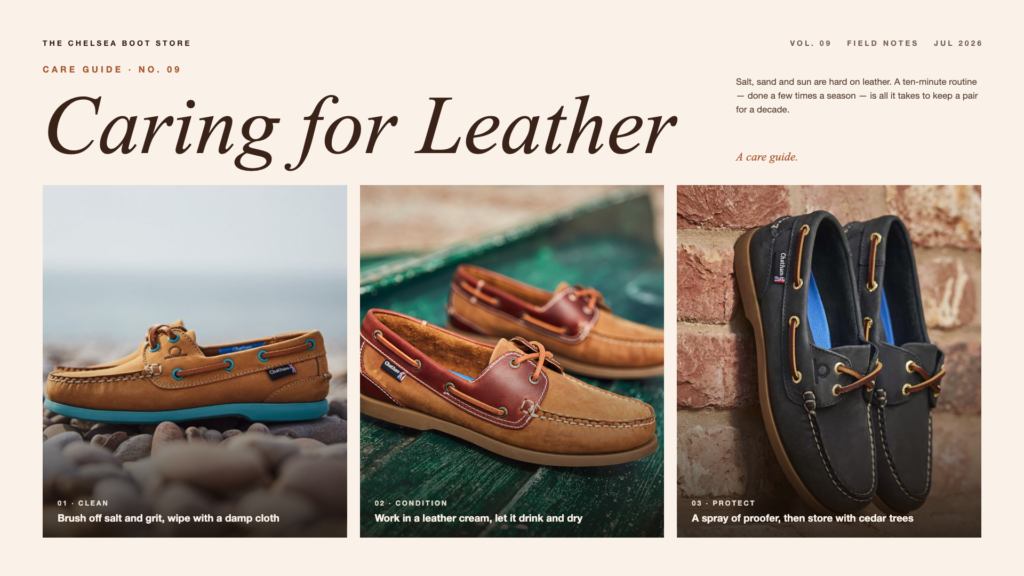
Deck shoes are built to withstand genuinely demanding conditions. However, durability depends on proper care. Salt water, sun exposure and repeated wet and dry cycles all take a toll on leather over time. A few minutes of regular maintenance make a significant difference to how long a quality pair of deck shoes will last and how good they continue to look.
Why Deck Shoe Care Differs From Standard Leather Care
Deck shoes face a particular combination of conditions that most other leather footwear does not encounter regularly: salt water exposure, prolonged dampness, and repeated drying cycles, often in direct sun. Salt is particularly damaging to leather because it draws moisture out as it dries, leaving the fibres stiff and prone to cracking if the leather is not properly conditioned afterwards.
This is why salt-resistant leather treatments matter for anyone who genuinely uses their deck shoes near or on the water. Even with a salt-resistant finish, a basic care routine remains essential to keep the leather in good condition over the long term.
After Each Wear
A simple routine after each wear prevents the gradual build-up of damage that shortens the working life of leather deck shoes.
- Wipe down the upper: Use a soft, slightly damp cloth to remove dust, dirt and any salt residue from the leather surface. This is particularly important after coastal use, even with salt-resistant leather
- Clean the siped sole: A soft brush runs across the sole, removing grit and debris trapped in the fine siped cuts, maintaining the sole’s grip performance over time
- Allow to air out: Removing insoles if present and leaving the shoes in a well-ventilated space allows any residual moisture to evaporate naturally before the next wear, reducing the risk of odour and material breakdown
Drying Wet Deck Shoes Properly
How deck shoes are dried matters considerably more than most owners realise, and getting this step wrong is one of the most common causes of premature leather damage.
Never dry leather deck shoes near a radiator, in direct sunlight, or with a hairdryer. Direct heat causes leather to dry unevenly, shrinking and stiffening the fibres in a way that leads to cracking and a permanent loss of flexibility. Instead, remove any insoles, stuff the shoes loosely with paper to help them hold their shape and absorb internal moisture, and leave them to dry naturally at room temperature, away from any direct heat source. This process can take 24 to 48 hours, depending on how wet the leather has become, and patience at this stage genuinely protects the long-term condition of the shoe.
Conditioning the Leather
Conditioning replaces the natural oils that leather loses through wear, drying and exposure to salt water or sun. Without regular conditioning, leather becomes stiff, develops surface cracks, and loses the supple quality that makes it comfortable and durable.
A quality leather conditioner should be applied roughly every four to six weeks during regular use, or more frequently if the shoes are exposed to salt water or extended sun regularly. Apply a small amount with a soft cloth, working it into the leather in circular motions, then allow it to absorb fully before wearing the shoes again. Avoid over-conditioning, as excessive product can leave the leather feeling overly soft and may affect the structure of the upper over time.
Caring for the Siped Sole
The siped sole is the functional core of a deck shoe, and keeping it clean directly affects how well it performs. Over time, dirt, sand and debris can become embedded in the fine cuts, gradually reducing the channelling effect that gives the sole its grip on wet surfaces.
A stiff-bristled brush, used dry, is usually sufficient to clear most debris. For more stubborn build-up, a small amount of mild soap and water with a soft brush will lift dirt without damaging the rubber compound. Avoid harsh chemical cleaners, which can degrade rubber over time and reduce its flexibility and grip performance.
Caring for Goodyear Welted Deck Shoes
Goodyear-welted deck shoes, such as those produced by Solovair, have specific care considerations beyond standard leather maintenance, owing to their three-layer construction.
- Welt inspection: Periodically check the welt, the strip of leather or material joining the upper, sole and insole, for signs of separation or wear. Catching issues early prevents more significant repair work later
- Professional resoling: The key advantage of Goodyear welt construction is that the sole can be replaced independently of the upper once it wears through. When the time comes, a professional cobbler familiar with welted construction should carry out the resoling to preserve the integrity of the welt
- Conditioning the welt itself: Applying a small amount of leather conditioner to the welt area, not just the main upper, helps maintain flexibility at this construction point and reduces the risk of cracking where the welt meets the upper
Storage Between Wears
How deck shoes are stored when not in use affects how well they hold their shape and condition over time. Shoe trees, ideally cedar, help maintain the shape of the upper and absorb residual moisture between wears. If shoe trees are not available, loosely stuffing the toe with paper achieves a similar effect.
Storing deck shoes away from direct sunlight prevents the leather from drying out and fading prematurely, particularly relevant given how often deck shoes are worn and stored in bright, sunny conditions during the warmer months they are most associated with.
A Seasonal Care Routine
Given that deck shoes see most of their use during spring and summer, a seasonal approach to care is practical. Before the season begins, apply a fresh coat of leather conditioner and check the soles and welts for any wear accumulated from the previous year. During the season, maintain the after-wear routine of wiping down the upper and cleaning the sole. At the end of the season, give the shoes a thorough clean and condition before storing them away for autumn and winter, ensuring they are in good condition and ready to wear again when warmer weather returns.
Frequently Asked Questions
Can leather deck shoes get wet?
Yes, deck shoes are designed to handle wet conditions, including direct contact with sea water. However, they should be dried properly afterwards using natural air drying rather than direct heat, and conditioned regularly to replace the oils that water and salt exposure remove from the leather.
How often should you condition deck shoes?
Roughly every four to six weeks during regular use is a reasonable guide, increasing to more frequent conditioning if the shoes are regularly exposed to salt water or extended sun. Regular conditioning prevents the leather from drying out, cracking and losing its supple quality over time.
Can you wash the soles of deck shoes?
Yes. A stiff-bristled brush used dry removes most debris from the siped sole. For more stubborn dirt, mild soap and water with a soft brush is effective. Avoid harsh chemical cleaners, which can degrade the rubber compound and reduce grip performance over time.
How do you dry deck shoes after they get wet?
Remove any insoles, stuff the shoes loosely with paper to help them hold their shape, and leave them to dry naturally at room temperature away from direct heat sources such as radiators or direct sunlight. This process can take 24 to 48 hours and is essential for preventing cracking and permanent stiffening of the leather.
What is the welt on a Goodyear welted deck shoe?
The welt is a strip of material, usually leather, that joins the upper, the insole and the outsole in Goodyear welt construction. It is what allows the outsole to be replaced independently when it wears through, significantly extending the working life of the shoe compared to glued or moccasin construction.
Do deck shoes need to be waterproofed?
While deck shoes are built to handle wet conditions reasonably well, applying a leather waterproofing product periodically, particularly before the start of the season, further protects the upper from water damage and helps maintain the leather’s condition over the long term. This is especially worthwhile for non-salt-resistant leather used in regular coastal conditions.