
No products in the basket.
Articles
The Best Men’s Deck Shoes for 2026
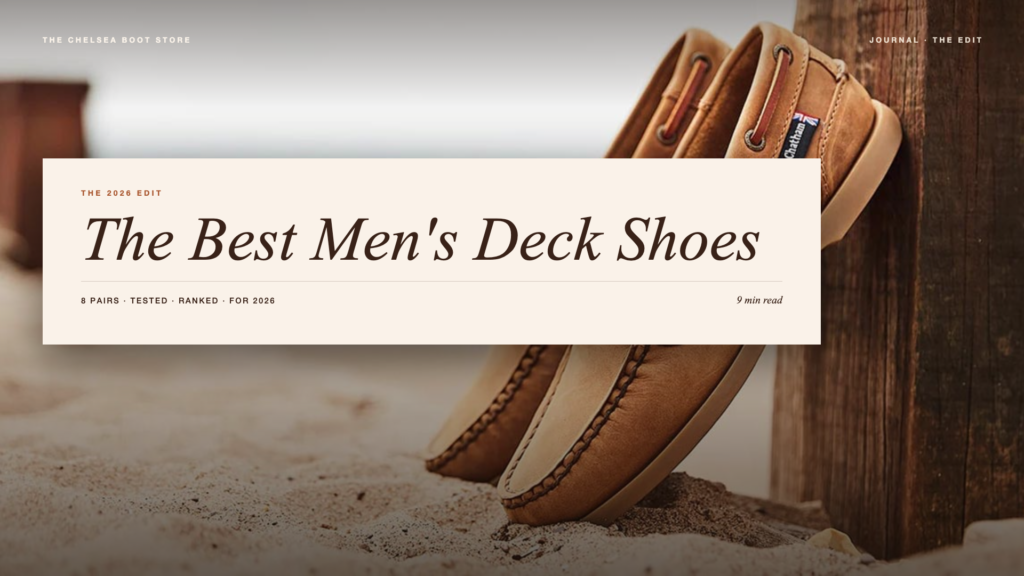
Choosing the right deck shoes comes down to a handful of genuine variables: construction quality, leather treatment, sole design and how the shoe will actually be used. With so many options on the market built to wildly different standards, knowing what separates a genuinely good deck shoe from a disposable one makes the buying decision considerably easier.
This guide covers the best men’s deck shoes available for 2026, focusing on construction, materials and the practical differences that justify one option over another.
What to Look for in a Quality Deck Shoe
Before comparing specific options, it helps to know which features actually matter. Several factors separate a deck shoe built to last from one that will need replacing within a season.
- Full-grain leather: The highest grade of leather available, retaining its natural surface rather than being sanded or corrected. It ages with character and holds up significantly better to repeated wear and conditioning than lower grades
- Salt-resistant treatment: A specific leather finishing process that prevents the white residue salt water leaves on standard leather. This matters considerably for anyone wearing deck shoes near the coast or on a boat, and is a feature that separates genuinely marine-purposed deck shoes from those that simply look the part
- Siped, non-marking sole: The functional core of a deck shoe. The fine cuts in the rubber channel water away from the contact surface, while non-marking compounds protect polished or varnished surfaces from scuffing
- Construction method: Whether the shoe uses a moccasin-stitched upper or Goodyear welt construction significantly affects durability, comfort and whether the sole can be replaced when it eventually wears through
- Country of manufacture: British-made deck shoes, produced under longstanding manufacturing traditions, generally command a higher standard of finishing and quality control than mass-produced imports
Chatham Bermuda Deck Shoes
The Chatham Bermuda is built around the classic deck shoe silhouette: a moccasin-stitched toe, full-grain leather upper and a siped, non-marking rubber sole designed specifically for wet and uneven surfaces. Available in multiple colourways, the Bermuda gives buyers genuine choice in how the shoe fits into a wider wardrobe, from classic tan through to richer brown tones.
What sets the Bermuda apart within Chatham’s range is the salt-resistant leather treatment applied as standard. For anyone who spends real time near the coast, whether on a boat or simply walking sea-affected pavements regularly, this is a meaningful practical advantage over a deck shoe built with standard leather. The hand-finished detailing around the upper also gives the Bermuda a slightly more refined edge than entry-level deck shoes, making it a strong option for buyers who want a shoe capable of moving between genuine marine use and everyday smart casual wear.
Chatham Deck G2 Shoes
The Deck G2 represents Chatham’s update on the traditional deck shoe silhouette, built with the same marine-grade construction principles but a slightly more contemporary profile. The brown leather upper and refined lacing detail give the G2 a cleaner, slightly dressier look than some traditional deck shoe styles, while retaining the siped sole and salt-resistant treatment that defines Chatham’s deck shoe range.
For buyers who want a deck shoe that leans towards smart casual rather than purely casual, the G2’s more tailored silhouette is worth considering over the classic Bermuda profile. The practical performance is equivalent. The difference is primarily in how the shoe reads visually within an outfit.
Solovair Men’s Deck Shoes
The Solovair deck shoe takes a fundamentally different approach to construction, and it is the standout option for anyone prioritising long-term durability over initial softness. Built using Goodyear welt construction, in which the upper, welt and sole are stitched together in three layers, the Solovair deck shoe can be resoled independently of the upper. This single feature has a significant impact on the realistic lifespan of the shoe, allowing a well-cared-for pair to outlast a moccasin-construction deck shoe by a considerable margin.
Solovair have produced footwear in England since 1881, and that manufacturing heritage is reflected directly in the construction standard of the deck shoe. It is listed as unisex, reflecting the brand’s straightforward approach to sizing rather than gendered styling. For buyers who see footwear as a long-term investment and want a deck shoe built with the same construction standard as a quality leather boot, the Solovair is the clear standout in this category.
How to Choose Between Them
The decision between Chatham and Solovair comes down to priorities rather than one being objectively superior to the other.
If coastal practicality and salt-resistant performance are the priority, Chatham’s range, and the Bermuda in particular, is built specifically for that use case. If a more refined, slightly dressier deck shoe silhouette is preferred without sacrificing marine-grade construction, the Deck G2 offers that balance. If long-term durability and resoling capability matter more than initial cost, the Solovair’s Goodyear welted construction represents the stronger long-term investment, particularly for buyers who already understand the value of welted construction from owning quality leather boots or shoes elsewhere in their wardrobe.
A Note on Fit
Deck shoes generally run true to standard UK sizing, though the moccasin-style construction used in some models can feel slightly different from a structured shoe initially. The upper is designed to mould closely to the foot, and the wrap-around stitching at the toe creates a snugger initial fit than a conventional lace-up shoe.
For Goodyear welted options such as the Solovair, expect a slightly firmer fit on first wear that will soften and mature with use, in line with how any quality welted leather footwear behaves. Standard UK sizing applies, and checking the specific size guide for each brand before ordering is always worthwhile, given the differences in last shape between manufacturers.
Frequently Asked Questions
What is the best deck shoe brand in the UK?
Chatham and Solovair are two of the most established British deck shoe brands, each excelling in different areas. Chatham specialises in marine-grade, salt-resistant deck shoes built specifically for coastal use. Solovair brings Goodyear welted construction and over 140 years of English shoemaking heritage, prioritising long-term durability and resoling capability.
Are expensive deck shoes worth it?
Generally, yes, provided the higher price reflects genuine construction quality rather than branding alone. Full-grain leather, salt-resistant treatment and Goodyear welt construction all extend the working life of a deck shoe considerably and improve comfort over time. A well-made pair, properly maintained, will significantly outlast a cheaper alternative.
What is the difference between the Chatham Bermuda and Deck G2?
Both use the same marine-grade construction principles and salt-resistant leather treatment. The Bermuda has a classic moccasin deck shoe silhouette, while the Deck G2 offers a slightly more refined, tailored profile with different lacing detail. The choice between them is largely down to which silhouette suits the wearer’s wardrobe and styling preferences.
Is Solovair a good brand for deck shoes?
Yes. Solovair has produced footwear in England since 1881 and uses Goodyear welt construction, a three-layer stitching method that allows the sole to be replaced independently of the upper. This significantly extends the realistic lifespan of the shoe compared to standard moccasin-construction deck shoes.
Do deck shoes run true to size?
Most quality deck shoes run true to standard UK sizing, though moccasin-stitched styles can feel snugger initially due to the wrap-around upper construction. Goodyear welted deck shoes, such as the Solovair, may feel firmer on first wear and will soften with use. Checking the specific brand’s size guide before ordering is recommended given variation in last shape between manufacturers.